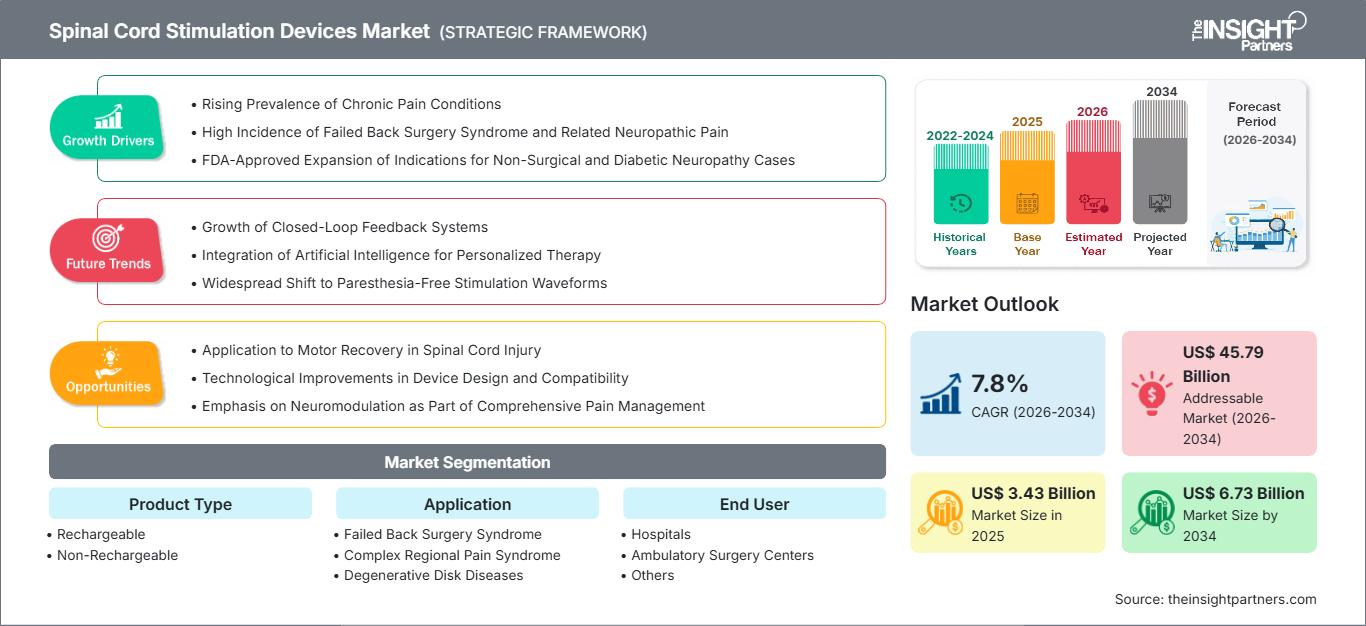
According to The Insight Partners, the spinal cord stimulation devices market size is projected to reach US$ 6.73 billion by 2034 from US$ 3.43 billion in 2025. The market is expected to register a CAGR of 7.8% during 2026–2034. The growing burden of chronic pain, increasing awareness regarding neuromodulation therapies, and technological innovations in implantable medical devices are expected to support market expansion throughout the forecast period.
Download Sample PDF @ https://www.theinsightpartners.com/sample/TIPRE00043149
Market Overview
Spinal cord stimulation devices are implantable systems designed to deliver mild electrical impulses to the spinal cord to block or modify pain signals before they reach the brain. These devices are commonly used to treat chronic back pain, failed back surgery syndrome, complex regional pain syndrome, neuropathic pain, and other persistent pain conditions.
As healthcare providers increasingly seek alternatives to opioid-based pain management, spinal cord stimulation has gained recognition as a safe and effective therapy. Modern SCS systems offer advanced programming capabilities, rechargeable batteries, wireless connectivity, and personalized treatment options, further driving adoption across healthcare settings.
The growing acceptance of neuromodulation technologies and favorable clinical outcomes continue to strengthen the market outlook.
Key Market Drivers
Increasing Prevalence of Chronic Pain Conditions
One of the primary drivers of the Spinal Cord Stimulation Devices Market is the rising incidence of chronic pain disorders worldwide. Conditions such as lower back pain, neuropathic pain, degenerative spine disorders, and nerve injuries affect millions of individuals annually.
Chronic pain significantly impacts patient quality of life and often results in reduced mobility, emotional distress, and increased healthcare utilization. As the number of patients seeking effective long-term pain management solutions grows, demand for spinal cord stimulation therapies continues to increase.
Healthcare providers are increasingly recommending neuromodulation therapies for patients who have not responded adequately to traditional treatment approaches.
Growing Preference for Minimally Invasive Treatments
Patients and healthcare professionals are increasingly favoring minimally invasive procedures that offer reduced recovery times, lower complication risks, and improved clinical outcomes.
Spinal cord stimulation implantation procedures are less invasive than many surgical alternatives and provide reversible treatment options. The ability to trial the therapy before permanent implantation further enhances patient confidence and treatment success rates.
This growing preference for minimally invasive pain management solutions remains a significant driver of market growth.
Rising Concerns Regarding Opioid Dependence
The global effort to reduce opioid dependence and improve chronic pain management strategies has accelerated interest in non-pharmacological therapies.
Spinal cord stimulation offers a drug-free alternative for many chronic pain patients, helping reduce reliance on opioid medications while maintaining effective symptom control. Healthcare systems and regulatory agencies increasingly support treatment approaches that minimize opioid exposure, creating favorable conditions for market expansion.
Technological Advancements in Neuromodulation Devices
Continuous innovation is transforming spinal cord stimulation technologies. Manufacturers are introducing advanced devices that provide improved stimulation patterns, enhanced patient customization, longer battery life, and better clinical performance.
The development of high-frequency stimulation, burst stimulation, closed-loop systems, and wireless programming technologies is improving treatment effectiveness and patient satisfaction. These technological advancements are contributing significantly to market growth.
Get Full Copy @ https://www.theinsightpartners.com/buy/TIPRE00043149
Market Trends
Adoption of High-Frequency Stimulation Technologies
One of the key trends in the market is the increasing adoption of high-frequency spinal cord stimulation systems. These technologies provide pain relief without generating the tingling sensations commonly associated with traditional stimulation methods.
Patients increasingly prefer therapies that offer improved comfort and consistent pain management, driving demand for advanced stimulation platforms.
Expansion of Personalized Pain Management
Personalized medicine is becoming increasingly important in pain management. Modern spinal cord stimulation devices allow clinicians to customize therapy settings based on individual patient needs and treatment responses.
The growing emphasis on personalized treatment approaches is supporting broader adoption of advanced neuromodulation systems.
Integration of Digital Health Technologies
Digital connectivity and remote monitoring capabilities are becoming more common in implantable medical devices. Manufacturers are incorporating smartphone applications, wireless controllers, and remote programming features into spinal cord stimulation systems.
These innovations improve patient engagement, therapy management, and clinical efficiency while enhancing overall treatment outcomes.
Market Segmentation
According to The Insight Partners, the Spinal Cord Stimulation Devices Market is segmented based on product type, application, end user, and geography.
By Product Type
- Rechargeable Spinal Cord Stimulators
- Non-Rechargeable Spinal Cord Stimulators
By Application
- Failed Back Surgery Syndrome
- Complex Regional Pain Syndrome
- Degenerative Disc Disease
- Neuropathic Pain
- Chronic Back and Leg Pain
By End User
- Hospitals
- Specialty Clinics
- Ambulatory Surgical Centers
- Pain Management Centers
Hospitals and specialized pain management centers continue to account for a significant share of market demand due to increasing procedural volumes and access to advanced neuromodulation technologies.
Competitive Landscape
The Spinal Cord Stimulation Devices Market is highly competitive, with major medical device manufacturers focusing on product innovation, strategic partnerships, and geographic expansion.
Key companies operating in the market include:
- Boston Scientific Corp
- Abbott Laboratories
- Medtronic Plc
- Nevro Corp
- Curonix LLC
- Biotronik SE & Co KG
- Nalu Medical Inc
- GIMER MEDICAL
- Saluda Medical Pty Ltd.
- Beijing PINS Medical Co Ltd
These companies continue to invest in research and development initiatives aimed at improving device performance, patient outcomes, and treatment accessibility.
Regional Analysis
North America holds a significant share of the Spinal Cord Stimulation Devices Market due to advanced healthcare infrastructure, high adoption of innovative medical technologies, and increasing awareness regarding chronic pain treatment options. The region also benefits from strong reimbursement frameworks and the presence of major industry participants.
Europe remains an important market supported by growing demand for minimally invasive therapies, rising chronic pain prevalence, and expanding access to specialized healthcare services.
Asia Pacific is expected to witness strong growth during the forecast period. Rising healthcare expenditures, increasing awareness of neuromodulation therapies, growing aging populations, and expanding healthcare infrastructure are driving market demand across countries such as China, Japan, India, and South Korea.
Emerging regions including Latin America and the Middle East are also creating new opportunities as healthcare systems continue to modernize and improve access to advanced pain management technologies.
Future Outlook
The future of the Spinal Cord Stimulation Devices Market remains highly promising. Rising chronic pain prevalence, increasing demand for non-opioid treatment solutions, technological advancements in neuromodulation devices, and growing healthcare investments are expected to support strong market growth through 2034.
The introduction of next-generation stimulation technologies, enhanced digital connectivity, and personalized treatment platforms will continue to transform chronic pain management. Companies that focus on innovation, patient-centered care, and clinical effectiveness are expected to maintain strong competitive positions in this rapidly evolving medical device market.
Related Reports @
Spinal Cord Stimulators Market Size, Segments, and Growth by Forecast by 2031
Electrical Stimulation Devices Market Growth, Demand & Size by 2034
About Us –
The Insight Partners provides comprehensive syndicated and tailored market research services in the healthcare, technology, and industrial domains. Renowned for delivering strategic intelligence and practical insights, the firm empowers businesses to remain competitive in ever-evolving global markets.
Contact Us:
Contact Person: Ankit Mathur
E-mail: [email protected]
Phone: +1-646-491-9876
Also Available in : Korean German Japanese French Chinese Italian Spanish