
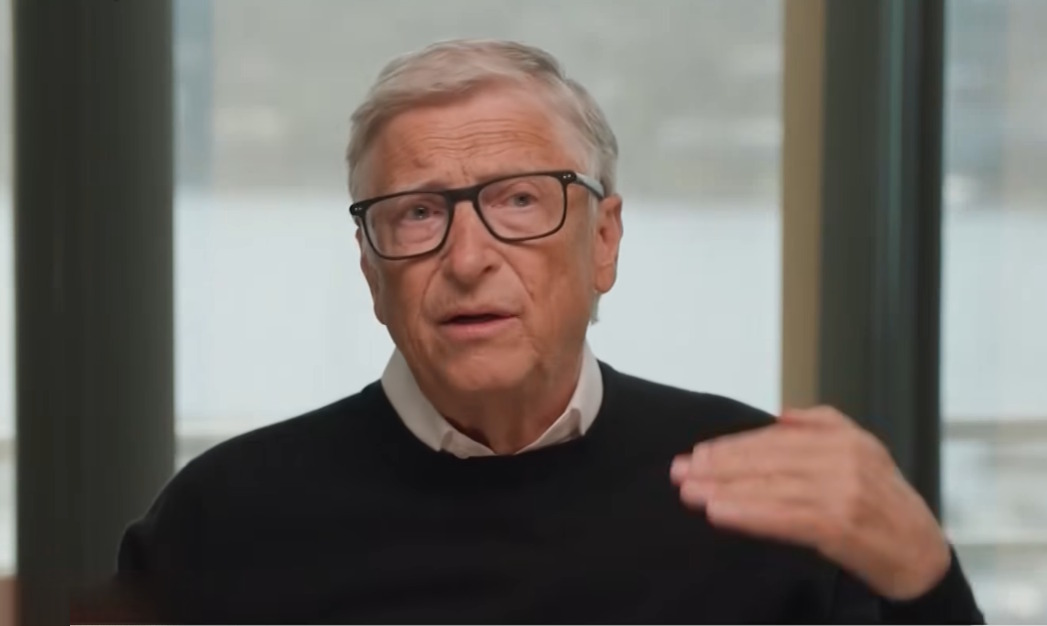
Microsoft co-founder Bill Gates said Sunday that society will soon have to decide how to tax artificial intelligence and which jobs should be kept for people. He warned that AI “changes the world more than all previous technologies.”lokmattimes+1
Gates spoke on CNN’s State of the Union. Host Jake Tapper asked him about his earlier warning that AI job losses would be “unprecedented” because they reach into nearly every sector. Tapper also asked about Gates’s call to keep some work in education and health care for humans.
Gates said he was watching “how fast these models are improving and what the incentive is to use the AI in place of human labor.”
“In the years ahead, we really do need to make a decision as a society, how do we tax AI usage or robot usage? And where do we want to make sure the human jobs are preserved?” he said.
He said the idea of keeping certain work for humans “may sound bizarre” until people understand how powerful the technology is, “but, in fact, we will get there.” Gates helped build the personal computer and internet era. He called those changes “a big deal, but nothing compared to this.”
Gates said the most immediate danger was “bad people using AI,” especially for cyberattacks. He predicted that “over the next year, we will move beyond self-governance” by AI companies, with government safety bodies like the ones that oversee aviation and medicines. He said he had heard from “a number of politicians” and hoped “in time” to talk about his concerns with President Donald Trump and “his key people.”
A “token tax” and “Human Reserved” jobs
The interview built on a nearly 6,000-word essay Gates posted on his Gates Notes blog in late August. In it, he proposed a “token tax” on AI use and the creation of “Human Reserved” jobs. “Right now, if you’re an employer and you hire someone, you pay payroll taxes on their earnings. But if you buy a robot, you can usually write it off right away as a business expense,” he wrote. “The tax system nudges you toward replacing people with machines.” He said the money raised could pay for retraining and a stronger safety net. He also said the tax should be targeted so it does not slow “purely beneficial uses of AI, like making medicine and education cheaper.”
Critics push back
The proposals have drawn objections. A Washington Examiner op-ed argued that taxing AI tokens would be hard to define. It also said any official list of protected jobs would invite lobbying from trade groups. The piece noted that economist Lawrence Summers called Gates’s 2017 robot-tax idea “profoundly misguided.”
Gates’s remarks also come as AI reshapes India’s IT outsourcing industry. India’s tech trade body Nasscom said hiring is expected “to shift from volume to skill mix.”



