The manufacturing sector is undergoing a profound digital transformation driven by the integration of advanced technologies, Internet of Things (IoT) devices, and sophisticated data analytics tools. Among these innovations, predictive analytics has emerged as a crucial component for modern industrial operations. By leveraging historical data, machine learning algorithms, and statistical techniques, predictive analytics enables manufacturers to anticipate equipment failures, optimize supply chains, improve product quality, and significantly reduce operational downtime.
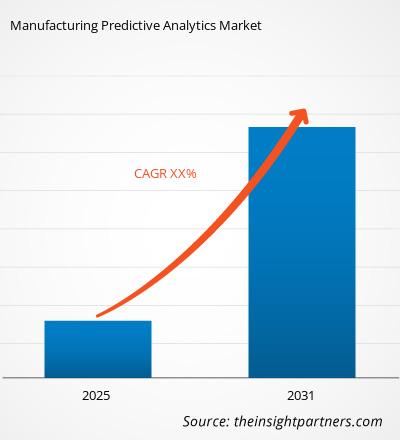
The global Manufacturing Predictive Analytics Market size is projected to reach US$ 6.58 billion by 2034 from US$ 1.87 billion in 2025. The market is anticipated to register a CAGR of 17.05% during the forecast period 2026-2034.
Market Overview and Growth Drivers
Predictive analytics in manufacturing moves organizations from reactive and preventive maintenance strategies to proactive operational management. Traditional manufacturing models heavily relied on routine schedule-based maintenance or reactive fixes after machinery broke down, both of which resulted in unexpected operational delays and high cost burdens. Modern predictive analytics tools continuously analyze telemetry data from sensor-equipped assets to signal potential anomalies before disastrous equipment failures occur.
Several key factors are propelling the growth of the global manufacturing predictive analytics market:
-
Rising Adoption of Industry 4.0 and Smart Factories: As industrial enterprises build interconnected ecosystems, the sheer volume of generated operational data has increased exponentially. Predictive analytics provides actionable intelligence from this raw data, enabling smart factory automation.
-
Focus on Minimizing Unplanned Downtime: Machine failure can cost industrial operations millions of dollars per hour. Predictive maintenance solutions empower plant managers to schedule repairs during planned downtime windows, preserving capital and throughput.
-
Supply Chain Visibility and Optimization: Predictive analytics extends beyond factory walls into logistics, demand forecasting, inventory management, and supplier performance evaluation, creating resilient and agile supply chains.
-
Enhanced Quality Control: Real-time data processing helps identify manufacturing defects during early production stages, preventing waste, reducing scrap rates, and enforcing strict compliance standards.
Get a PDF Sample- https://www.theinsightpartners.com/sample/TIPRE00007509
Regional Dynamics
-
North America: Dominates a major share of the market due to early technology adoption, extensive presence of leading software providers, and significant investments in advanced manufacturing infrastructure.
-
Europe: Driven by strong automotive, aerospace, and industrial machinery sectors alongside government initiatives supporting green manufacturing and digital industrial standards.
-
Asia-Pacific: Expected to display rapid expansion during the forecast period. Massive investments in industrial infrastructure across China, India, Japan, and Southeast Asia paired with accelerating smart factory initiatives make the region a key hub for market expansion.
Key Players Operating in the Market
The competitive landscape of the manufacturing predictive analytics market is characterized by active innovation, strategic partnerships, and ongoing technological integration. Key companies providing predictive analytics solutions in this space include:
-
Civis Analytics
-
Fair Isaac Corporation
-
IBM Corporation
-
Microsoft Corporation
-
Oracle Corporation
-
RapidMiner, Inc.
-
SAP SE
-
SAS Institute Inc.
-
Tableau Software, Inc.
-
TIBCO Software Inc.
These industry leaders continuously invest in research and development to incorporate artificial intelligence (AI), edge computing capabilities, and cloud-native architectures into their analytics platforms, ensuring seamless integration with existing Enterprise Resource Planning (ERP) and Manufacturing Execution Systems (MES).
Key Applications in Manufacturing
-
Predictive Asset Maintenance: Monitoring machinery health to predict failure timelines and optimize maintenance cycles.
-
Demand Forecasting and Inventory Optimization: Analyzing historical sales and market trend data to align production schedules with actual demand.
-
Yield and Process Optimization: Fine-tuning equipment parameters to achieve higher output with lower energy consumption.
-
Quality Assurance: Detecting manufacturing anomalies early in the production line to minimize defect rates and material waste.
Get Full Copy of This Report- https://www.theinsightpartners.com/buy/TIPRE00007509
Future Outlook
The future of the manufacturing predictive analytics market remains extraordinarily promising as industrial enterprises accelerate their transition toward autonomous operations and AI-driven decision-making. Over the coming decade, the integration of generative AI, real-time edge analytics, and digital twin technology with predictive analytics platforms will unlock new levels of precision, enabling systems not only to forecast problems but also to autonomously prescribe and execute corrective actions. Furthermore, as sustainability, resource management, and carbon footprint reduction become imperative corporate benchmarks, predictive analytics will play an indispensable role in optimizing energy utilization and resource conservation across global supply networks. Driven by continuous technological refinement and expanding adoption among small and medium enterprises, the market is well-positioned to maintain robust growth through 2034 and beyond.
About Us
The Insight Partners is a one-stop industry research provider of actionable intelligence. We help our clients in getting solutions to their research requirements through our syndicated and consulting research services. We specialize in industries such as Semiconductor and Electronics, Aerospace and Defense, Automotive and Transportation, Biotechnology, Healthcare IT, Manufacturing and Construction, Medical Devices, Technology, Media, and Telecommunications, as well as chemicals and Materials.