Key Highlights
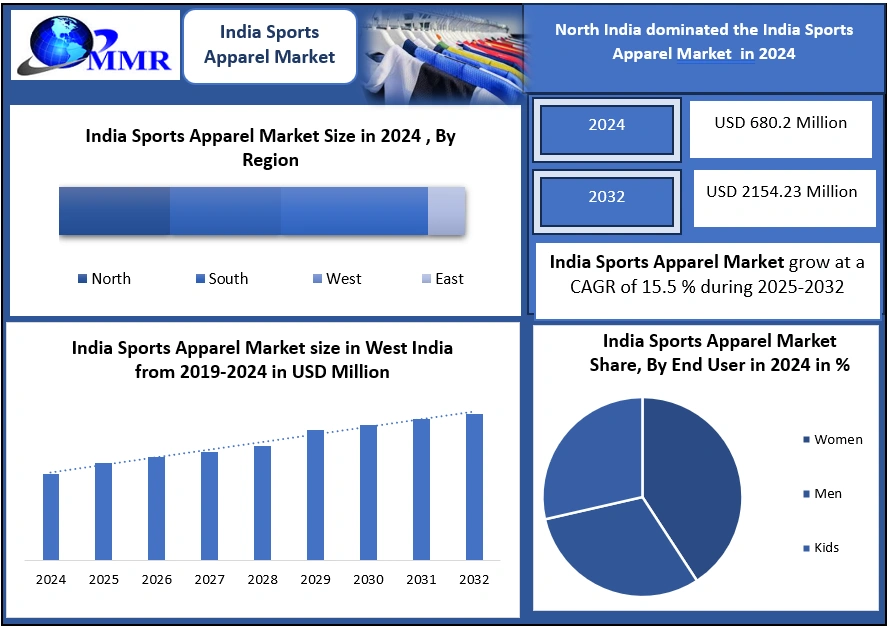
- The India Sports Apparel Market was valued at USD 680.2 Mn in 2024 and is projected to reach USD 2,154.23 Mn by 2032, turning activewear into a larger consumer-growth category for brands, retailers and investors.
- The market is forecast to grow at a 15.5% CAGR from 2025 to 2032, supported by fitness participation, athleisure adoption and branded sportswear demand.
- More than 110 Mn Indians participated in fitness, gym workouts, running and sports activities in 2024, creating a broad consumer base for sportswear and performance apparel.
- T-shirts dominated the product type segment in 2024 because of affordability, versatility and use across gym, running and casual athleisure occasions.
- E-commerce platforms such as Myntra, Amazon, Ajio and Decathlon reported over 35% year-on-year growth in online sports apparel demand in 2024, making digital distribution a central growth channel.
Why This Matters Now
India’s sportswear market is no longer built only around gyms and cricket jerseys. It is becoming a daily wardrobe category, and brands that miss the shift from performance wear to lifestyle athleisure will lose share.
The market’s projected rise to USD 2,154.23 Mn by 2032 shows that activewear is moving from niche purchase to mass consumption. The implication is direct: pricing, product design, digital visibility and Tier-II reach now matter as much as global brand equity.
Market Overview
India Sports Apparel Market covers T-shirts, track pants and tights, sports vests, sweatshirts and other sportswear products across men, women and kids. Distribution includes online and offline channels, giving brands two parallel battlegrounds: digital discovery and physical trust.
Demand is being shaped by fitness participation, lifestyle shifts toward athleisure and adoption of performance wear in Tier-I and Tier-II cities. IPL, ISL, marathons and fitness events have also accelerated branded merchandise and specialized apparel demand.
India still has large headroom. Per capita sportswear spending remains nearly 6–8 times lower than the United States and China, which creates space for affordable performance wear, sustainable apparel, smart clothing and brand-led innovation.
Key Trends Driving Growth
Fitness culture is the first demand engine. Indians are adopting yoga, running, gym workouts and outdoor sports after the pandemic, lifting demand for activewear, athleisure and performance sportswear.
Technology is widening access. FITPASS, wearable devices and AI-enabled fitness apps are making fitness easier to enter, which pushes apparel demand beyond committed athletes into everyday consumers.
Consumer behavior is shifting toward versatility. Urban millennials and Gen Z buyers prefer clothing that works for exercise, casual wear and social occasions, which explains the rise of athleisure as the fastest-growing category.
E-commerce is changing market reach. India’s online fashion segment recorded more than 20.9% order-volume growth in FY24, while rising smartphone penetration gives sports apparel brands access to young consumers and regional markets.
Sustainability is becoming a differentiator. The report identifies growing awareness of sustainable and ethically produced sports apparel, while Adidas India’s sustainable line gained traction with eco-conscious buyers. Clean-label demand is not disclosed in the source because the category is apparel, not packaged food.
Segment Insights
- Dominant Segment T-Shirts: T-shirts dominated the product type segment in 2024. Their lead comes from affordability, broad acceptance and use across gym workouts, running and casual athleisure fashion.
- Fastest-Growing Segment Athleisure Category: Athleisure is identified as the fastest-growing category, driven by urban millennials and Gen Z consumers who want everyday performance wear.
- Consumer Segment Scope: Men, women and kids are covered. The report highlights rising involvement of women and children in sports, but does not disclose end-user share by value.
- Distribution Scope: Online and offline channels are covered. Online sports apparel demand grew strongly in 2024, while offline stores remain important for brand trust, fit and discovery.
- Opportunity Segment: Affordable performance wear, sustainable sports apparel and smart clothing are identified as future opportunities, especially as India’s per capita sportswear spending remains low.
Regional Growth Story
India’s metro markets still lead. Delhi NCR, Mumbai, Bengaluru, Hyderabad and Chennai dominate demand because they have higher uptake of premium activewear, performance sportswear, gym memberships, fitness studios and marathon participation.
Tier-II and Tier-III cities are becoming the next growth layer. Indore, Jaipur, Lucknow and Coimbatore are emerging due to e-commerce access, smartphone use and digital fitness culture.
North and West India show strong demand for cricket, running and training apparel. South India is developing as a hotspot for tech-enabled fitness and smart sportswear, giving brands scope to localize campaigns and assortment by region.
Rural areas remain price-sensitive, but logistics networks and online availability are expanding reach. That creates a two-speed market: premium metros at the top, affordable performance products in emerging cities and rural-access channels below.
Competitive Landscape
The market is contested by Adidas India, Alcis Sports, ASICS India, Decathlon, Fila India, HRX, NG Apparel, Nike India, Nivia, Puma India, Sareen Sports, Shiv Naresh, Skechers India, Tyka Sports and Under Armour. Competition is moving from brand recall to pricing, fit, channel access and category-specific innovation.
Nike India maintained leadership through premium performance sportswear and collaborations with major sports events such as IPL, helping deliver a 15% sales rise. This signals that premium brands can still win if they attach performance credibility to high-visibility sports platforms.
Adidas India gained momentum through sustainable sports apparel and reported a 20% sales increase. That signals rising demand for ethical fashion and puts pressure on rivals to move sustainability from capsule collections into mainstream assortments.
Puma India grew 12% across urban markets by focusing on affordable, stylish and performance-led athleisure. Decathlon India recorded 25% growth through value pricing, retail expansion and online demand, showing that scale and affordability can compete directly with premium positioning.
Local brands such as HRX, Cultsport and Alcis are raising pressure with trend-led, budget-friendly activewear tailored to Indian consumers. Over the next 12–24 months, rivals will need sharper regional pricing, AI-driven sizing, smart fabrics and stronger D2C execution.
Recent Developments
- January 2024 ASICS India: ASICS expanded in Tier-II and Tier-III cities as these regions accounted for 60% of its e-commerce sales. The move signals that premium sportswear demand is no longer limited to metro buyers.
- 2024 ASICS Store Expansion: ASICS opened its 111th store at DLF Promenade in New Delhi, planned 120 stores by year-end and targeted 200 stores by 2026. This signals confidence in offline-led brand building.
- 2024 ASICS Local Production: ASICS aimed to increase local production from 30% to 35–40% in 2024. Local sourcing can improve cost control and responsiveness.
- January 30, 2023 Adidas India: Adidas entered a major retail franchise agreement with CK Jaipuria Group to set up stores across India, focused on Tier-II and Tier-III markets. The plan targeted 100 Adidas footwear stores by the end of 2024.
Strategic Implications
For brands, the winning formula is no longer premium logos alone. India needs layered pricing, credible performance fabrics, athleisure styling and region-specific distribution.
For retailers, e-commerce is now a demand creator, not only a sales channel. Marketplace data, influencer campaigns and online sizing tools can shorten the gap between discovery and purchase.
For investors, price sensitivity and counterfeit apparel remain the core risks. Unorganized and imitation products dilute brand value, especially in Tier-II and Tier-III cities where consumers still seek lower-cost alternatives.
Future Outlook
The India Sports Apparel Market is forecast to reach USD 2,154.23 Mn by 2032 at a 15.5% CAGR. Growth will come from fitness participation, athleisure, women and kids in sports, e-commerce, digital fitness platforms, sustainable apparel and deeper retail access beyond metros.
Winners will localize price, product and distribution for India’s next activewear buyer; losers will remain trapped between premium pricing, counterfeit competition and weak Tier-II reach.
Analyst Perspective
“India’s sports apparel market is moving from performance-only buying to lifestyle-led consumption,” said Siddhi Dole, Analyst at Maximize Market Research. “Brands that combine affordability, technical fabrics, digital reach and credible athleisure positioning will define the next phase of category growth.”
About Maximize Market Research
Maximize Market Research Pvt. Ltd. (MMR) is a global market research and consulting company that provides reliable, data-focused, and practical business insights. The firm serves a wide range of industries, including healthcare, pharmaceuticals, technology, automotive, electronics, chemicals, personal care, and consumer goods. Through market forecasts, competitive analysis, strategic consulting, and industry impact assessments, MMR helps organizations understand changing market conditions, identify growth opportunities, and make informed business decisions for long-term success.
2nd Floor, Navale IT Park Phase 3
Pune Banglore Highway, Narhe
Pune, Maharashtra 411041, India
+91 9607365656
[email protected]