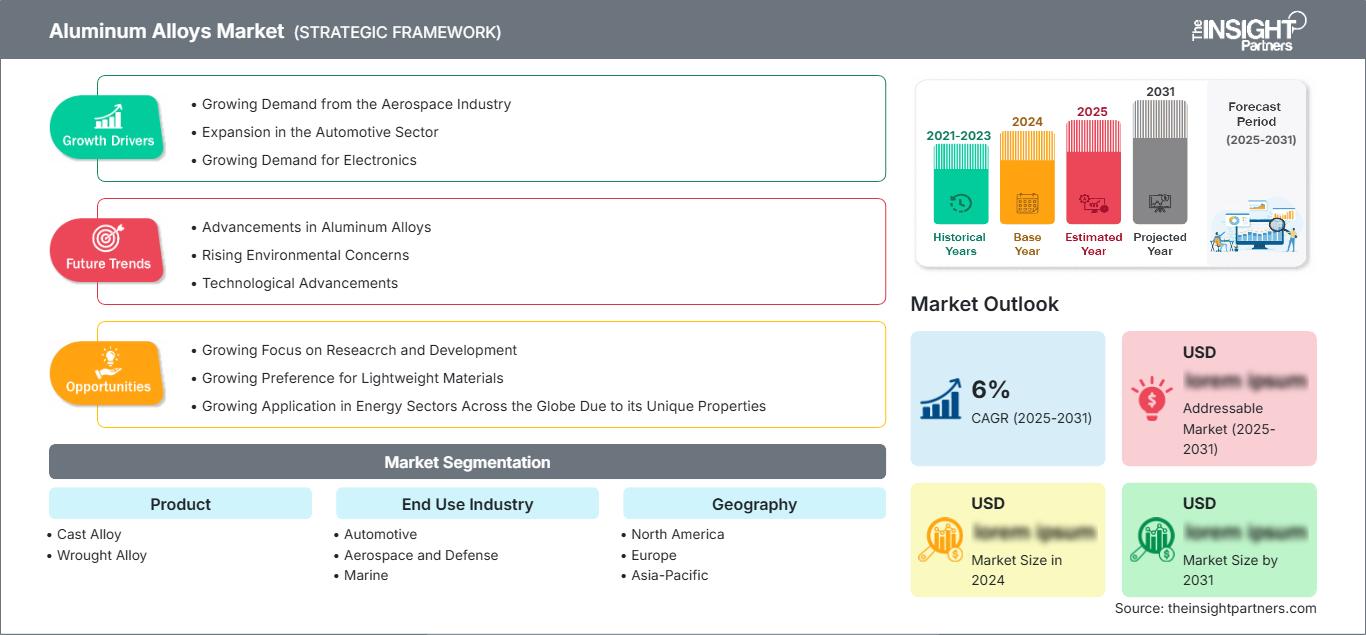
Lightweight materials are no longer optional in modern manufacturing. They are a strategic imperative. The Aluminum Alloys Market is projected to climb from US$ 266.67 Billion in 2025 to US$ 426.41 Billion by 2034, recording a CAGR of 5.35% from 2026 to 2034. From electric vehicles to next-generation aircraft, aluminium alloys are the material of choice where strength, weight, and corrosion resistance must coexist.
What Is Aluminum Alloys?
Aluminium alloys are metallic materials composed primarily of aluminium combined with elements such as copper, magnesium, manganese, silicon, or zinc to enhance mechanical and physical properties. They are broadly classified into cast alloys and wrought alloys, each suited to different fabrication methods and performance requirements. Their exceptional strength-to-weight ratio and recyclability make them indispensable across automotive, aerospace, marine, and construction sectors.
Request a Sample Copy of the Report: https://www.theinsightpartners.com/sample/TIPRE00009484
Why Aluminum Alloys Demand Is Accelerating Across Industries
The automotive industry is at the heart of this market’s expansion. Automakers are under mounting regulatory pressure to reduce vehicle emissions, and lightweighting through aluminium alloys is one of the most effective levers available. A 10% reduction in vehicle weight can cut fuel consumption by 6–8%, making high-performance aluminium alloys central to both internal combustion efficiency programmes and electric vehicle range optimisation. Battery enclosures, structural frames, and body panels in EVs are increasingly manufactured from advanced aluminium alloys, and this trend is only gathering pace.
Aerospace and defence remain the market’s premium segment. Aircraft manufacturers continue to specify aluminium alloys for fuselage structures, wing components, and interior frameworks where the combination of fatigue resistance, machinability, and low density is critical. Defence procurement programmes globally are driving sustained demand for high-strength alloy grades. What makes this particularly significant is the long production cycles in aerospace, which lock in material volumes years ahead of delivery, providing stable forward demand visibility for producers.
The marine sector adds another dimension to growth. Shipbuilders and boat manufacturers are adopting aluminium alloys to reduce hull weight, improve fuel efficiency, and extend vessel service life. Corrosion resistance in saline environments is a key selection criterion here, and aluminium alloys outperform many alternatives without requiring heavy protective coatings. Beyond these established segments, construction applications in curtain walls, roofing systems, and structural frames are expanding the addressable market further.
Recyclability is one of aluminium’s most commercially compelling attributes. Recycled aluminium requires only about 5% of the energy needed to produce primary aluminium, a fact that is gaining significance as carbon accounting enters procurement decisions. Manufacturers investing in closed-loop supply chains can now credibly market low-embodied-carbon alloy products, which commands a price premium among sustainability-conscious buyers in automotive and construction.
Segmentation Overview
The aluminium alloys market is segmented by product and end use industry.
By Product:
- Cast Alloy
- Wrought Alloy
By End Use Industry:
- Automotive
- Aerospace and Defense
- Marine
- Others
Wrought alloys dominate production volumes, valued for their superior mechanical properties and suitability for rolling, extrusion, and forging processes used extensively in automotive and aerospace components. Cast alloys serve applications where complex geometries are required, such as engine parts and structural castings. Automotive leads end use demand, followed by aerospace and defence, with marine and construction contributing growing shares as design engineers expand aluminium alloy specifications.
Key Market Players
- Rio Tinto PLC
- Aluminium Bahrain B.S.C.
- Norsk Hydro ASA
- Hindalco Industries Limited
- Alcoa Inc.
- Aleris International Inc.
- Constellium
- Kobe Steel Ltd.
- United Company RUSAL Plc
- Aluminum Corporation of China Ltd
These players span primary smelters, downstream processors, and specialty alloy producers. The competitive dynamic is shifting toward value-added products and recycled-content alloys as customers demand both performance and sustainability credentials from their materials suppliers.
Sustainability and Innovation Trends
Decarbonisation is rewriting the aluminium alloys supply chain. Major producers are investing in low-carbon smelting technologies powered by hydroelectric and renewable energy, positioning green aluminium as a differentiated product for customers with scope 3 emissions targets. Constellium and Norsk Hydro have both made public commitments to significantly reduce the carbon intensity of their alloy portfolios by 2030.
Alloy development is advancing rapidly. High-strength series alloys for structural automotive applications, heat-treatable alloys for electric vehicle battery systems, and corrosion-resistant marine-grade variants are all in active development pipelines. Additive manufacturing is also opening new application areas, with specialised aluminium alloy powders now enabling complex aerospace components to be produced with less material waste than conventional machining.
Buy Premium Report: https://www.theinsightpartners.com/buy/TIPRE00009484
Regional Outlook
Asia-Pacific dominates the global aluminium alloys market and is the fastest-growing region. China is the world’s largest producer and consumer of aluminium alloys, driven by its massive automotive manufacturing base, rapid infrastructure development, and expanding aerospace sector. India is emerging as a significant growth market, with domestic vehicle production and government-backed infrastructure investment fuelling alloy demand. North America holds a strong position, underpinned by robust aerospace procurement and the reshoring of automotive manufacturing. Europe remains a technologically advanced market, with strict vehicle emissions standards accelerating premium alloy adoption across the region’s leading automotive producers.
Related Reports:
High Temperature Composite Resin Market
About The Insight Partners
The Insight Partners is among the leading market research and consulting firms in the world. We take pride in delivering exclusive reports along with sophisticated strategic and tactical insights into the industry. Reports are generated through a combination of primary and secondary research, solely aimed at giving our clientele a knowledge-based insight into the market and domain. This is done to assist clients in making wiser business decisions. A holistic perspective in every study undertaken forms an integral part of our research methodology and makes the report unique and reliable.
Contact Us:
If you have any queries about this report or if you would like further information, please contact us:
Phone: +1-646-491-9876
E-mail: [email protected]
Also Available in: Korean | German | Japanese | French | Chinese | Italian | Spanish