The global security architecture is undergoing a profound paradigm shift, accelerated by evolving geopolitical tensions, territorial disputes, and the rising sophistication of asymmetric threats. In this modern threat landscape, maintaining persistent situational awareness along international borders and around critical infrastructure is paramount. Ground Surveillance Radar (GSR) systems have emerged as an indispensable technology for military, paramilitary, and commercial security forces worldwide. Acting as the “eyes” of perimeter defense, these radar systems provide all-weather, day-and-night tracking capabilities capable of detecting personnel, vehicles, and low-flying aerial targets. A comprehensive study illuminates the rapid financial and technological expansion characterizing this crucial defense segment.
Market Size and Growth Trajectory
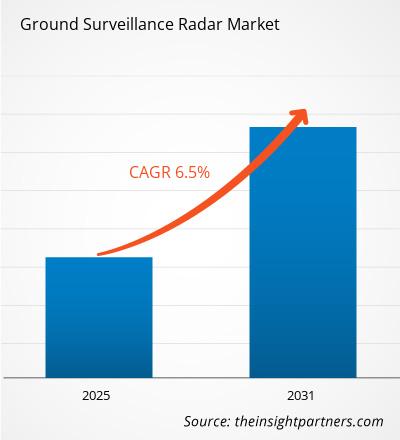
According to data published by The Insight Partners, the Ground Surveillance Radar Market size is expected to reach US$ 31.51 Billion by 2034 from US$ 15.28 Billion in 2025. This substantial increase highlights a period of intense capital deployment and system modernization across both developed and developing nations. The market is estimated to record a CAGR of 8.38% from 2026 to 2034.
This sustained compound annual growth rate indicates that the demand for GSR technology is not merely a temporary reaction to localized conflicts, but rather a long-term strategic priority for defense procurement agencies globally. The transition from legacy monitoring systems to highly automated, networked radar solutions is a primary catalyst propelling these valuation figures over the next decade.
Key Drivers of Market Expansion
Several macroeconomic and technological factors underpin the projected growth of the ground surveillance radar sector. Foremost among these is the escalating need for border security. Countries spanning Eastern Europe, the Middle East, and East Asia are actively upgrading their border fence infrastructure with electronic surveillance arrays to deter illegal immigration, smuggling, and cross-border insurgencies.
Furthermore, the commercial sector is presenting new avenues of growth. Critical national infrastructure such as nuclear power plants, international airports, seaports, and massive oil and gas refineries requires continuous monitoring against potential sabotage. Traditional visual surveillance tools, like CCTV cameras, face severe limitations in poor weather conditions, such as dense fog, heavy rain, or sandstorms. GSR systems bypass these limitations by utilizing radio waves to penetrate atmospheric disruptions, delivering accurate telemetry data regardless of ambient conditions.
Another vital catalyst is the rapid proliferation of small Unmanned Aerial Vehicles (UAVs). Traditional air defense radars are tuned to detect large, fast-moving aircraft and often miss low, slow, and small (LSS) drones due to ground clutter filtering. Modern GSR systems are increasingly engineered with software-defined capabilities that allow them to dual-task, detecting ground targets while simultaneously acting as counter-UAV tracking nodes to safeguard restricted airspace.
Get a PDF Sample– https://www.theinsightpartners.com/sample/TIPRE00016474
Segments Covered
By Type
- Short Range
- Mid-Range
- Long Range
By Component
- Antenna
- Duplexer
- Power Amplifier
- Transmitter
By Application
- Commercial
- Defense
- Space
Get Full Copy of This Report- https://www.theinsightpartners.com/buy/TIPRE00016474
Future Outlook
Looking toward the horizon, the future of the ground surveillance radar market will be profoundly shaped by the integration of Artificial Intelligence (AI) and Machine Learning (ML) algorithms. Future-generation GSR systems will move beyond simple detection and tracking to intelligent target classification, autonomously distinguishing between humans, animals, vehicles, and environmental noise to drastically minimize false alarm rates. Furthermore, the industry is moving towards the adoption of Cognitive Radar systems, which dynamically adjust their operational parameters, frequencies, and waveforms in real time based on changes in the surrounding environment or electronic jamming attempts. As multi-sensor fusion becomes standard practice combining GSR data seamlessly with acoustic sensors, drone mitigation systems, and satellite telemetry the ground surveillance radar market will solidify its position as an foundational pillar of 21st-century electronic warfare and homeland security frameworks.
Related Reports-
Ground based air radar system Market
About Us
The Insight Partners is a one-stop industry research provider of actionable intelligence. We help our clients in getting solutions to their research requirements through our syndicated and consulting research services. We specialize in industries such as Semiconductor and Electronics, Aerospace and Defense, Automotive and Transportation, Biotechnology, Healthcare IT, Manufacturing and Construction, Medical Devices, Technology, Media, and Telecommunications, as well as chemicals and Materials.