Key Highlights
-
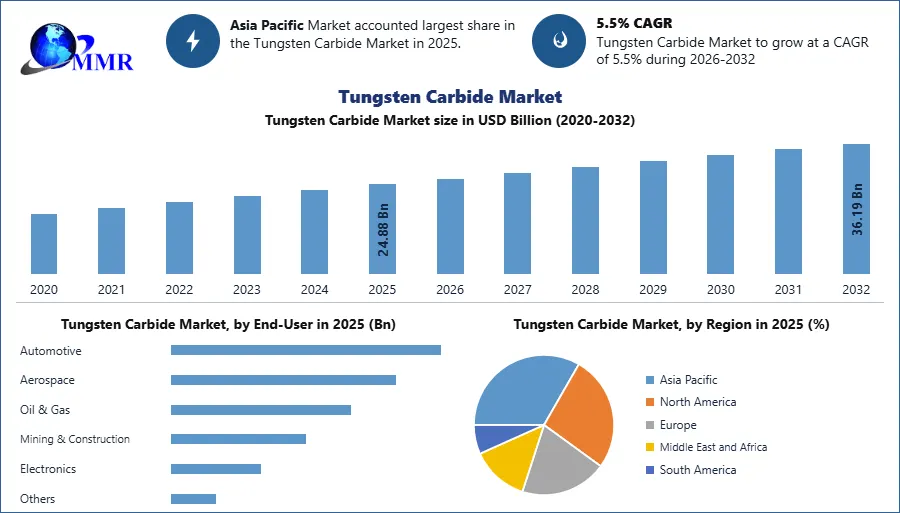
Market valuation is projected to scale from USD 24.88 billion in 2025 to nearly USD 36.19 billion by 2032, achieving a steady 5.5% CAGR.
-
Regulatory shifts and trade interventions drastically altered availability, highlighted by a 40% reduction in global shipments of specific precursors due to Chinese export controls.
-
The automotive sector holds the dominant position, holding a 41% market growth share by 2032 due to manufacturing innovation pressures.
-
Secondary material sourcing has emerged as a major focus, with new product lines demonstrating a 70% reduction in production carbon footprints through 100% recycled materials.
-
Advanced manufacturing capacity is scaling up, with leading producers expanding automated production lines to achieve up to 25% efficiency gains.
Why This Matters Now
Volatile geopolitical landscapes and shifting export policies have disrupted traditional sourcing channels for refractory materials, forcing chemical manufacturers and industrial buyers to re-evaluate their raw material reliance. A massive 40% drop in specific global precursor shipments following strict export controls in early 2025 has created immediate supply pressures across the international supply chain. Procurement leaders must move quickly to secure upstream materials or rapidly qualify secondary, recycled options to prevent sudden production halts.
At the same time, high-precision industrial sectors are accelerating their technical specifications, requiring tooling that can withstand extreme thermal and mechanical loads. The sudden doubling of global machine tool demand to approximately USD 200 billion highlights a massive wave of industrial re-tooling. For chemical and metallurgical producers, this creates an urgent opportunity to shift from standard commodities toward specialty submicron powders and sustainable circular options.
Market Overview
The global tungsten carbide market reached a baseline valuation of USD 24.88 billion in 2025, driven by critical industrial requirements for high-density, high-hardness compounds. The market is projected to reach nearly USD 36.19 billion by 2032, sustaining a steady 5.5% CAGR. Physically taking the form of a fine grey powder with the chemical formula WC, this inorganic compound provides structural resilience that outperforms standard high-speed steel, especially in extreme heat conditions.
What has changed is the strict regulatory pressure surrounding the manufacturing environment. The primary health hazards linked to dust inhalation, which can cause pulmonary fibrosis, have classified it as an anticipated human carcinogen. Consequently, strict government oversight has increased compliance costs, forcing manufacturers to upgrade production facilities or risk heavy operational penalties.
Key Trends Driving Growth
Downstream tooling requirements have shifted dramatically as industrial manufacturers adopt tough-to-machine materials like stainless and carbon steel. Because tungsten carbide withstands extreme operating temperatures better than high-speed steel, it has become crucial for complex machine tool fabrication. This extreme resistance to wear ensures longer tool lifespans and protects operators from structural failures during heavy manufacturing processes.
Simultaneously, infrastructure investments and resource extraction projects are accelerating worldwide. Significant expansions across the oil and gas, agricultural, and construction sectors have triggered an intense wave of rotary drilling and mining operations. This growth directly drives the consumption of heavy-duty inserts, where alternative tool materials fail under high mechanical stress.
Beyond industrial machining, targeted research and development has unlocked critical applications in high-value medical fields. The compound has proven to be an effective radiation barrier for protecting human tissue and delicate electronic equipment during specialized medical procedures. Its application in syringe protection shields for radioactive injections highlights its growing value outside traditional industrial sectors.
Segment Insights
-
Cemented Carbide (Dominant Application Segment): Combining tungsten carbide particles with a cobalt-rich metallic binder, this segment leads the market due to its widespread use in metal cutting, wood machining, and structural parts. In the United States, cemented carbide parts account for nearly 65% of domestic tungsten utilization, representing an estimated consumption value of approximately USD 550 million in 2020.
-
Automotive Manufacturing (Dominant End-User Segment): Driven by the pressure to innovate and adapt manufacturing lines, the automotive sector is projected to capture a 41% growth share of the global market by 2032. This dominance is reflected in trade volumes, with the amount of tungsten carbide contained in U.S. exports jumping 25% in 2024 compared to the previous year.
-
Aerospace and Defense (Fastest-Growing Segment): Spurred by rising global defense budgets and a strong recovery in commercial aircraft orders, this sector is rapidly expanding its market footprint. Because it offers high friction and heat resistance at a lower cost than diamond alternatives, it is increasingly used to replace critical aircraft components.
-
Semiconductor Micro-Tooling (Emerging Specialty Segment): The rapid scaling of electronics and circuit board manufacturing has created a strong need for ultra-fine precision tools. Advanced circuit board drills and micro-mills rely heavily on high-purity powders to ensure uniform particle distribution and prevent structural fractures during micro-machining.
Regional Growth Story
The Asia Pacific region continues to lead global market expansion, driven by massive manufacturing infrastructure and intensive resource extraction projects. Populous manufacturing hubs like China and India are aggressively scaling up oil and gas exploration to satisfy domestic energy demands, heavily driving the use of carbide-tipped drilling assemblies. Together with Japan, these nations represent the largest concentration of tungsten carbide consumption worldwide.
In North America, the United States remains a major hub for advanced chemical processing, with approximately six specialized domestic firms converting raw tungsten concentrates into high-purity carbide powders. The region’s growth is anchored by highly mature automotive, defense, and electronics manufacturing sectors that demand stable domestic sourcing.
Across Europe, market activity is heavily shaped by strict regional environmental policies and advanced automotive engineering. European automotive research teams are increasingly adopting tungsten carbide coatings to significantly lower vehicular dust emissions while boosting brake system performance.
Competitive Landscape
The global market structure is undergoing significant consolidation as major players invest heavily in capacity upgrades, vertical integration, and proprietary material formulas to build stronger pricing power. Upstream volatility has forced major chemical and metallurgical producers to move away from open-market spot purchasing. Instead, they are focusing on securing internal supply lines and expanding advanced processing capacities to shield themselves from external geopolitical disruptions.
At the same time, leading producers are investing heavily in automated, precision-focused manufacturing facilities to lower labor dependencies and optimize output. Competition has shifted from basic commodity price wars to high-margin specialty powders, such as submicron and ultra-fine grades. By controlling everything from intermediate chemical synthesis to finished tool inserts, these primary market leaders are effectively setting industry standards and squeezing smaller, non-integrated competitors.
Recent Developments
-
On 12 February 2025, China Minmetals Corporation implemented new government-mandated export control restrictions on tungsten products, causing an immediate 40% reduction in global shipments of key tungsten carbide precursors and tightening international supply.
-
On 20 May 2025, Sandvik AB commissioned a fully automated manufacturing cell for high-precision inserts, boosting operational production efficiency by 25% to address rising aerospace and defense order backlogs.
-
On 14 August 2025, Kennametal Inc. launched a specialized submicron grade tungsten carbide powder tailored for semiconductor micro-tooling, delivering improved fracture toughness for precision cutting.
-
On 10 November 2025, CERATIZIT S.A. fully commercialized its Upcycle tool line made from 100% recycled materials, reducing its manufacturing carbon footprint by 70% while establishing a stable secondary raw material stream.
-
On 16 March 2026, Xiamen Tungsten Co., Ltd. expanded its vertically integrated production capacity for Ammonium Paratungstate (APT) to stabilize its internal raw material supply against volatile global market pricing.
Strategic Implications
The operational updates from 2025 and 2026 show a clear division in the market. China Minmetals’ 40% export reduction proves that relying too heavily on primary geographic hubs poses a major risk to supply chain resilience. Manufacturers can no longer depend on stable open-market availability for raw tungsten concentrates. Xiamen Tungsten’s expansion of its Ammonium Paratungstate capacity shows that vertical integration is no longer just an advantage—it is essential for survival.
Meanwhile, the successful launch of CERATIZIT’s 100% recycled tool line proves that sustainability initiatives can provide practical business advantages during material shortages. Achieving a 70% lower carbon footprint while securing secondary material streams shows that circular economy practices offer an effective shield against primary supply shocks. Furthermore, Sandvik’s 25% efficiency gains through automation indicate that surviving high inflation and strict health regulations requires moving away from labor-intensive processing.
Future Outlook
Industrial supply chains will likely face ongoing friction due to tighter export quotas and rising compliance costs for hazardous dust management. Procurement leaders who fail to diversify away from primary geopolitical sources risk severe supply shortages and margin erosion. The long-term winners will be integrated chemical and metallurgical producers that secure secondary recycled streams and scale up submicron powder technology to meet the precise requirements of the expanding aerospace and semiconductor industries.
Analyst Perspective
“The sudden restriction of primary tungsten shipments has fundamentally shifted the market’s focus toward supply chain resilience and advanced circular recycling,” notes Ankita Kagawade, Research Analyst at Maximize Market Research. “Industrial buyers are no longer just looking for the lowest cost per kilogram; they are actively seeking out vertically integrated suppliers and verified recycled grades to protect their production lines from geopolitical disruptions.”
About Maximize Market Research
Maximize Market Research Pvt. Ltd. (MMR) is a global market research and consulting company that provides reliable, data-focused, and practical business insights. The firm serves a wide range of industries, including healthcare, pharmaceuticals, technology, automotive, electronics, chemicals, personal care, and consumer goods. Through market forecasts, competitive analysis, strategic consulting, and industry impact assessments, MMR helps organizations understand changing market conditions, identify growth opportunities, and make informed business decisions for long-term success.
2nd Floor, Navale IT Park Phase 3
Pune Banglore Highway, Narhe
Pune, Maharashtra 411041, India
+91 9607365656
[email protected]