Key Highlights
- The Polyether Polyols Market was valued at USD 16 billion in 2025 and is expected to reach nearly USD 25.05 billion by 2032, growing at a CAGR of 6.61%.
- Asia Pacific held the leading market share in 2025, supported by construction, automotive manufacturing, furniture production and polyurethane processing capacity.
- Flexible foam is expected to remain the dominant application because of demand from furniture, bedding, automotive seating and packaging.
- Rigid foam demand is supported by insulation needs in buildings, refrigeration and industrial applications.
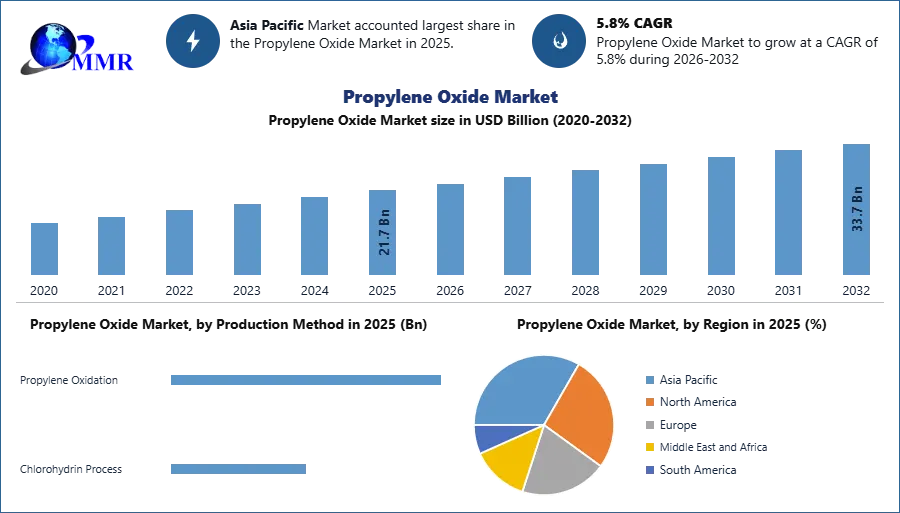
- Propylene oxide and ethylene oxide are key feedstocks, making raw-material availability and petrochemical pricing central to producer margins.
- Sustainability pressure is accelerating interest in bio-based, recycled and lower-carbon polyol technologies.
Why This Matters Now
Polyether polyol producers are being pulled between rising polyurethane demand and a tougher raw-material equation. Construction, automotive and furniture customers need more foam and insulation, but propylene oxide exposure, energy costs and sustainability rules are forcing suppliers to rethink how they protect margins.
The Polyether Polyols Market Size was valued at USD 16 billion in 2025 and is expected to reach nearly USD 25.05 billion by 2032, growing at a CAGR of 6.61% from 2026 to 2032. The increase signals a larger opportunity for polyurethane raw-material suppliers, while the growth rate also points to a market where capacity discipline, feedstock access and product mix will determine returns.
For industrial buyers, polyether polyols are no longer interchangeable inputs. Foam density, insulation performance, emissions profile and processing reliability increasingly affect product quality and compliance. That gives specialty producers more room to differentiate, even as commodity-grade supply remains price-sensitive.
Market Overview
Polyether polyols are polymer intermediates used primarily to produce polyurethane materials. They react with isocyanates to make flexible foam, rigid foam, coatings, adhesives, sealants and elastomers. Their role spans furniture, bedding, automotive interiors, building insulation, refrigeration, footwear and industrial applications.
The market is closely tied to polyurethane demand. Flexible polyurethane foam is used in seating, mattresses, packaging and automotive components. Rigid foam is used for thermal insulation in buildings, appliances and cold-chain equipment. These downstream sectors create a broad demand base, but each has different performance and pricing requirements.
Polyether polyols are commonly produced using propylene oxide and ethylene oxide. This links producer economics to petrochemical supply, crude-oil-linked pricing and regional feedstock availability. Integrated chemical companies can manage this exposure more effectively when they control upstream oxide production.
The report identifies expanding construction, automotive production and furniture demand as core growth drivers. The business implication is that polyol suppliers can capture demand across several large end markets, but they must manage cyclicality in housing, consumer spending and vehicle output.
Key Trends Driving Growth
Construction is increasing demand for rigid polyurethane foam. Building insulation helps improve energy efficiency and reduce heating and cooling requirements. As governments and developers focus on energy-saving buildings, demand for high-performance insulation materials can support polyether polyol consumption.
Flexible foam remains central to the market. Furniture, mattresses, automotive seating and packaging use flexible polyurethane foam because it provides cushioning, comfort and durability. This keeps polyether polyols closely linked to consumer demand and automotive production cycles.
Automotive manufacturers are using polyurethane materials in seats, headrests, interior components and lightweight parts. Vehicle makers are also under pressure to improve comfort, reduce weight and meet efficiency targets. Polyol suppliers that can support low-emission, durable and lightweight foam systems may gain stronger positions with automotive customers.
Sustainability is changing product development. Bio-based polyols, recycled polyols and lower-carbon production pathways are gaining attention as customers seek to reduce material footprints. These products can create premium opportunities, but they must meet the performance and processing standards of conventional polyurethane systems.
Circular economy activity is also increasing. Recycling polyurethane waste into usable polyol streams can reduce reliance on virgin feedstocks and address landfill concerns. The commercial challenge is maintaining consistent quality, supply and economics at scale.
Feedstock risk remains a major issue. Propylene oxide and ethylene oxide availability affect production costs and plant operating rates. Disruptions in upstream petrochemicals can tighten supply, while weak downstream demand can pressure prices and reduce capacity utilization.
Technology is improving formulation flexibility. Producers are developing polyols with different molecular weights, functionalities and reactivity profiles to meet requirements in foam, coatings, adhesives, sealants and elastomers. This supports higher-value specialty grades and reduces dependence on standard foam markets.
Segment Insights
- Dominant Segment — Flexible Foam: Flexible foam is expected to dominate the Polyether Polyols Market because of extensive use in furniture, bedding, automotive seating and packaging. Its scale gives consumer demand and automotive output a major influence on polyol volumes.
- Fastest-Growing Segment — Not specified in the supplied report: The report identifies growing demand from construction, automotive and sustainable polyurethane applications but does not name a fastest-growing segment.
- Rigid Foam Applications: Rigid foam demand is supported by insulation use in buildings, refrigeration equipment and industrial systems. Energy-efficiency requirements can strengthen demand for polyols used in thermal insulation formulations.
- CASE Applications: Coatings, adhesives, sealants and elastomers use polyether polyols where flexibility, adhesion and durability are required. These applications offer specialty growth opportunities for suppliers with tailored formulations.
- Feedstock Exposure: Propylene oxide and ethylene oxide are key raw materials. Their availability and pricing directly affect production economics, supply reliability and competitiveness.
Regional Growth Story
Asia Pacific held the largest share of the Polyether Polyols Market in 2025. The region benefits from large construction activity, expanding automotive production, furniture manufacturing and polyurethane processing capacity. This creates both high-volume demand and intense competition among regional suppliers.
China is a major market because of its manufacturing scale, construction sector and polyurethane consumption. Its role in furniture, appliances, automotive production and insulation materials supports broad polyether polyol demand. Local capacity can also influence regional pricing and export availability.
India is gaining importance as infrastructure development, housing demand, automotive production and consumer goods manufacturing expand. The country offers growth potential for flexible foam, rigid insulation foam and CASE applications. Suppliers will need local distribution, technical support and reliable feedstock access to serve this market effectively.
Japan and South Korea remain relevant through advanced automotive, electronics, appliance and specialty chemical industries. The supplied report does not provide country-specific market values or capacity figures. Their opportunity lies in higher-performance applications, including specialty foam systems and advanced industrial materials.
North America remains important because of construction, automotive manufacturing, insulation demand and established polyurethane supply chains. The United States benefits from petrochemical infrastructure, which can support oxide feedstock availability. However, the supplied report does not provide separate national market data.
Europe remains a significant market for energy-efficient building materials, automotive components and sustainable chemical innovation. Germany is relevant through its automotive and chemical manufacturing base, though the supplied report provides no individual country figures. Environmental rules may accelerate adoption of lower-emission and recycled polyol systems.
Competitive Landscape
The market is competitive because polyether polyols sit between commodity petrochemicals and specialty polyurethane performance. Producers compete on feedstock integration, product quality, formulation support, local supply and sustainability credentials.
Integrated chemical companies have a structural advantage. Control over propylene oxide and ethylene oxide can improve cost visibility and reduce exposure to external supply disruptions. It can also support higher plant utilization when downstream polyurethane demand remains steady.
Specialty suppliers can compete by developing application-specific polyols. Automotive, insulation and CASE customers often require customized reactivity, viscosity, emissions performance and processing behavior. These requirements can support stronger margins than standard flexible foam grades.
Sustainability is becoming a competitive filter. Buyers are asking for bio-based content, recycled feedstocks and lower-carbon manufacturing. Suppliers that can provide credible material data and consistent performance may gain access to higher-value accounts, while conventional producers may face margin pressure in regulated markets.
Supply-chain resilience also affects market position. Polyol customers need uninterrupted delivery because foam production lines are sensitive to raw-material changes. Producers with regional manufacturing, storage capacity and strong logistics networks can secure long-term contracts and improve customer retention.
Recent Developments
- The report identifies growing demand for flexible polyurethane foam in furniture, bedding, automotive seating and packaging. This supports sustained demand for standard and performance-grade polyether polyols.
- Rigid foam demand is increasing with construction insulation and refrigeration applications. The trend favors producers that can supply polyols designed for thermal performance and energy-efficient building systems.
- Bio-based and recycled polyols are gaining interest as polyurethane customers seek lower-carbon material options. This signals a shift toward differentiated products with sustainability credentials.
- Polyol producers are developing grades for coatings, adhesives, sealants and elastomers. The move broadens exposure beyond foam markets and supports specialty-margin opportunities.
- Feedstock volatility in propylene oxide and ethylene oxide remains a strategic concern. This favors integrated producers and suppliers with diversified raw-material sourcing.
- The supplied report does not provide verified acquisition, partnership, capacity-expansion, pricing or trade-flow announcements. These details are omitted to avoid unsupported claims.
Strategic Implications
For producers, feedstock security is the central operating issue. Access to propylene oxide and ethylene oxide affects cost, supply reliability and capacity utilization. Integration, long-term supply contracts and regional sourcing can reduce exposure to volatility.
For buyers, polyol selection should be tied to end-product performance. Foam producers need stable reactivity and processing behavior, while insulation manufacturers need thermal efficiency and consistency. Procurement decisions based only on price can increase production risk and weaken product quality.
Sustainability will shape future investment. Bio-based and recycled polyols can create differentiation, but suppliers must prove that lower-carbon inputs do not compromise performance. Scale, quality control and certification will determine whether circular polyols move beyond niche applications.
The market’s growth profile supports selective capacity investment. New production should be linked to downstream polyurethane demand, feedstock access and local logistics. Unbalanced expansion could weaken pricing power in standard foam grades.
Future Outlook
The Polyether Polyols Market will be driven by polyurethane demand across construction, automotive, furniture and industrial applications. Growth will increasingly favor producers that combine reliable oxide feedstocks with high-performance and lower-carbon product portfolios.
The winners will be suppliers that turn feedstock control, application expertise and credible circular-polyol solutions into durable customer contracts.
Analyst Perspective
“Polyether polyols are central to the polyurethane value chain, but future growth will depend on more than volume. Producers that secure feedstocks, support high-performance applications and advance sustainable polyol technologies will be better positioned to capture demand,” said Ankita Kagawade, Analyst at Maximize Market Research.
About Maximize Market Research
Maximize Market Research Pvt. Ltd. (MMR) is a global market research and consulting company that provides reliable, data-focused, and practical business insights. The firm serves a wide range of industries, including healthcare, pharmaceuticals, technology, automotive, electronics, chemicals, personal care, and consumer goods. Through market forecasts, competitive analysis, strategic consulting, and industry impact assessments, MMR helps organizations understand changing market conditions, identify growth opportunities, and make informed business decisions for long-term success.
2nd Floor, Navale IT Park Phase 3
Pune Banglore Highway, Narhe
Pune, Maharashtra 411041, India
+91 9607365656
[email protected]