The global supply chain and logistics ecosystem is undergoing a massive transformation, driven by the exponential growth of e-commerce, expanding maritime trade, and the urgent need for operational efficiency at freight hubs. At the heart of these bustling hubs ranging from busy marine ports to sprawling distribution centers is the trailer terminal tractor. Often referred to as yard trucks, yard goats, or spotter trucks, these heavy-duty vehicles are engineered specifically for moving semi-trailers within cargo yards, warehouse facilities, and intermodal terminals. According to a comprehensive study by The Insight Partners, the market for these specialized vehicles is poised for remarkable growth over the next decade.
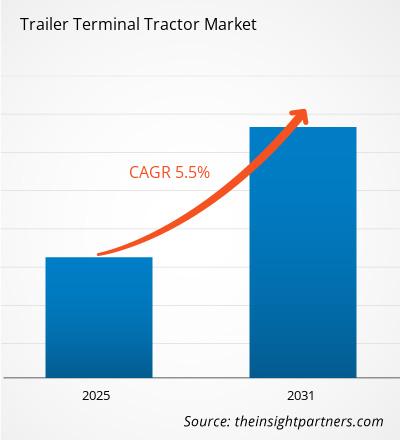
The global Trailer Terminal Tractor Market size is projected to reach US$ 16.16 billion by 2034 from US$ 8.42 billion in 2025. The market is anticipated to register a CAGR of 7.52% during the forecast period 2026-2034. This robust growth trajectory highlights the escalating reliance on automation and mechanized handling systems to mitigate operational bottlenecks and manage the unprecedented volumes of freight moving across the globe.
Market Drivers and Dynamics
Several critical factors are propelling the expansion of the trailer terminal tractor market. First and foremost is the pressure on logistics providers to reduce turnaround times. Standard over-the-road trucks are inefficient when it comes to short-distance, repetitive trailer spotting because drivers must repeatedly exit the cab to raise and lower landing gear. In contrast, terminal tractors are equipped with a hydraulic lifting fifth wheel that allows the operator to move trailers without leaving the driver’s seat. This significantly minimizes manual labor, enhances safety, and accelerates the movement of goods.
Furthermore, the expansion of inland container depots and the modernization of seaport infrastructure particularly across developing economies in the Asia-Pacific and Middle East regions are creating a sustained demand for high-capacity terminal tractors. Governments and private operators are investing heavily in updating port machinery to handle mega-container vessels, necessitating a reliable fleet of support vehicles on the ground.
Another massive shift steering the market is the transition toward sustainable energy. Stricter environmental regulations aimed at reducing carbon emissions in industrial zones have forced fleet operators to rethink their reliance on traditional diesel-powered tractors. As a result, manufacturers are investing heavily in research and development to introduce electric and hybrid alternatives, which not only curb emissions but also reduce long-term maintenance and fuel costs.
Get a PDF Sample– https://www.theinsightpartners.com/sample/TIPRE00020737
Competitive Landscape and Key Players
The trailer terminal tractor market features a mix of well-established automotive giants and highly specialized material handling equipment manufacturers. These companies are actively engaging in strategic partnerships, product innovations, and regional expansions to capture a larger share of this growing market.
Some of the prominent key players operating in the industry include:
-
BYD Co Ltd: A pioneer in electromobility, driving the market forward with its advanced, high-capacity electric yard tractors.
-
Capacity Trucks: Renowned for producing robust, customizable yard trucks tailored for port, rail, and warehouse operations.
-
Cargotec (Kalmar): A global leader in cargo handling solutions, consistently innovating with automated and eco-efficient terminal tractors.
-
CVS Ferrari S.P.A.: Highly regarded for manufacturing heavy-duty material handling machinery capable of enduring rigorous port environments.
-
Hoist Material Handling, Inc.: Known for high-quality, heavy-lift equipment and rugged vehicles optimized for industrial logistics.
-
Konecranes: A heavyweight in the lifting industry, offering smart, integrated terminal solutions that enhance port productivity.
-
MAFI Transport-Systeme GmbH: Specializing in heavy-duty tractors and trailers designed for internal transport in ports and industry.
-
Mol CY nv: An established manufacturer recognized for producing reliable, custom-engineered terminal and RoRo tractors.
-
The Autocar Company: A legendary American brand producing highly efficient, driver-focused spotter trucks with severe-duty capabilities.
-
The Volvo Group: A global automotive powerhouse delivering premium, high-performance powertrain technologies and sustainable transport solutions.
Get Full Copy of This Report-https://www.theinsightpartners.com/buy/TIPRE00020737
Future Outlook
The future of the trailer terminal tractor market points toward an increasingly automated, intelligent, and zero-emission ecosystem. Over the forecast period, the market will likely see a rapid displacement of diesel tractors by battery-electric (BEV) and hydrogen fuel-cell models, aligned with global net-zero goals. Beyond electrification, the integration of autonomous driving technology is set to redefine yard management. Autonomous terminal tractors, guided by sophisticated lidar, radar, and AI software, are already undergoing successful pilots in restricted, controlled port environments. As these technologies mature, fully driverless yard trucks will become standard in mega-distribution centers, seamlessly syncing with warehouse management systems to maximize throughput, eliminate human error, and ensure round-the-clock operational continuity.
Related Reports-
Four Wheel Drive Tractor Market
About Us
The Insight Partners is a one-stop industry research provider of actionable intelligence. We help our clients in getting solutions to their research requirements through our syndicated and consulting research services. We specialize in industries such as Semiconductor and Electronics, Aerospace and Defense, Automotive and Transportation, Biotechnology, Healthcare IT, Manufacturing and Construction, Medical Devices, Technology, Media, and Telecommunications, as well as chemicals and Materials.